Career Change Checklist
A practical step-by-step checklist to help you assess your current career, explore new opportunities, prepare for the transition, and move into a new career with a clear plan.
Who It's For
This Career Change Checklist is for professionals who are considering a career change and want a structured way to plan their next move. It is useful whether you are exploring a completely new field, moving into a different role, or preparing to transition from your current career.
Use it to organize your thinking, identify the skills and experience you can carry forward, research potential career paths, and prepare for the practical steps involved in making a successful career transition.
What You'll Get
The Career Change Checklist breaks the transition into manageable stages so you can move from initial career exploration to practical preparation and action. Instead of trying to change careers all at once, you can work through each stage and track what you have completed.
Career Change Readiness
Identify why you want to change careers, what you want from your next role, and whether you are ready to begin the transition.
Career Exploration
Research potential career paths, roles, industries, employers, and opportunities that align with your interests, strengths, experience, and goals.
Skills & Preparation
Identify transferable skills, determine skill gaps, update your resume and LinkedIn profile, and build the knowledge needed for your target career.
Transition & Job Search
Prepare your job-search strategy, network with relevant professionals, apply for suitable opportunities, evaluate offers, and plan your transition from your current career.
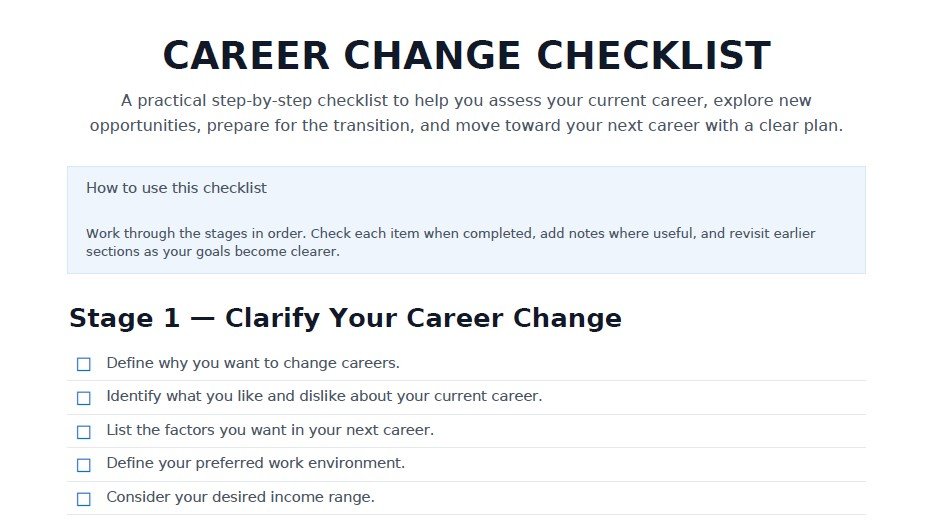
Career Change Checklist
Work through each stage in order. Check off the actions you have completed, and return to earlier stages whenever your goals or circumstances change.
1. Clarify Your Career Change
- Define why you want to change careers.
- Identify what you like and dislike about your current career.
- List the factors you want in your next career.
- Define your preferred work environment.
- Consider your desired income range.
- Consider your preferred location or work arrangement.
- Identify your long-term career goals.
- Write down the non-negotiables for your next career.
2. Assess Your Strengths
- List your current skills and areas of expertise.
- Identify your strongest transferable skills.
- Review your professional accomplishments.
- Identify skills that could transfer to another industry or role.
- Identify interests that could support a new career direction.
- Review feedback you have received from managers, colleagues, or clients.
- Identify areas where you need additional development.
3. Explore Career Options
- Identify several potential career paths.
- Research the responsibilities of each target role.
- Review typical qualifications and experience requirements.
- Research salary expectations.
- Research employment demand and opportunities.
- Review job postings for your target roles.
- Identify common skills employers are requesting.
- Compare your current qualifications with the requirements.
- Narrow your options to your strongest career paths.
4. Identify Skill Gaps
- Compare your current skills with your target-role requirements.
- Identify technical skills you need to develop.
- Identify professional or soft skills you need to strengthen.
- Determine whether certifications or formal education are necessary.
- Find relevant courses, training, or learning resources.
- Create a realistic learning schedule.
- Gain practical experience where possible.
- Build examples that demonstrate your new skills.
5. Build Your Career Transition Plan
- Select your primary target career.
- Define your target job titles.
- Identify target industries or employers.
- Set a realistic career-change timeline.
- Break the transition into monthly or weekly milestones.
- Determine whether you can transition directly or need an intermediate step.
- Review the financial implications of changing careers.
- Establish a financial buffer if needed.
6. Prepare Your Professional Brand
- Update your resume for your target career.
- Rewrite your professional summary around your new direction.
- Highlight transferable skills.
- Quantify relevant achievements.
- Update your LinkedIn profile.
- Review your LinkedIn headline and About section.
- Add relevant projects, certifications, or training.
- Prepare a concise explanation of your career transition.
7. Build Your Network
- Identify professionals working in your target field.
- Reconnect with relevant professional contacts.
- Join relevant professional communities.
- Attend industry events or online sessions.
- Request informational conversations where appropriate.
- Ask experienced professionals about their career paths.
- Learn about opportunities that may not be publicly advertised.
8. Start Your Job Search
- Define your target job criteria.
- Identify suitable job boards and company career pages.
- Create a targeted job-search strategy.
- Customize your resume for important applications.
- Write focused cover letters when appropriate.
- Track applications and follow-ups.
- Prepare for interviews.
- Practice explaining your career change positively.
- Evaluate opportunities against your career goals.
9. Evaluate Offers
- Compare compensation.
- Review benefits.
- Evaluate job responsibilities.
- Consider growth opportunities.
- Assess company and team culture.
- Consider work-life balance.
- Evaluate location and work arrangements.
- Consider long-term career potential.
- Confirm that the opportunity supports your broader career goals.
10. Make the Transition
- Confirm your new role or next career step.
- Review your resignation and notice requirements.
- Prepare a professional transition from your current role.
- Organize important documents and responsibilities.
- Communicate appropriately with colleagues.
- Prepare financially for the transition period.
- Establish priorities for your first 30–90 days.
- Continue developing the skills required for your new career.
- Review your progress after the transition.
Tip: You do not need to complete every item at once. Use the checklist as a working plan and revisit it as you learn more about your target career.
Preview
The checklist above gives you a preview of the complete career-transition workflow, from assessing your starting point to preparing for and making the transition.
How to Use It
Work through the checklist in order, completing each stage before moving to the next. You can also return to earlier stages as your career goals become clearer.
- Assess Your Starting Point
Review your current career, skills, experience, priorities, and reasons for wanting a change. Use this stage to clarify what you want from your next career. - Explore Your Options
Research potential roles and career paths. Compare their responsibilities, qualifications, skills, earning potential, and opportunities with your current experience. - Prepare for the Transition
Identify skill gaps and complete the training, projects, certifications, or other preparation required for your target career. - Position Yourself for Opportunities
Update your resume, LinkedIn profile, professional story, and network so employers and professional contacts can understand how your existing experience applies to your new direction. - Take Action and Transition
Begin your targeted job search, evaluate opportunities carefully, and follow a structured plan for moving from your current career into your new role.
Ready to Plan Your Career Change?
Download the Career Change Checklist, work through each stage, and use it to organize your next steps toward a new career.
Download Career Change Checklist View Checklist OnlineRelated Resources
Next Step
Once you have completed the checklist, turn your career-change priorities into a practical plan. Define your target career, identify the skills you need to develop, and set milestones for moving forward.
Read the Career Change Guide